Element.io The Open Standard for the Future of Communication
In an era where "free" communication usually comes at the cost of your data, and professional tools like Slack or Microsoft Teams trap you in proprietary silos, a new standard is emerging. Element is not just another messaging app; it is the flagship client for Matrix, an open standard for secure, decentralized, and real-time communication.
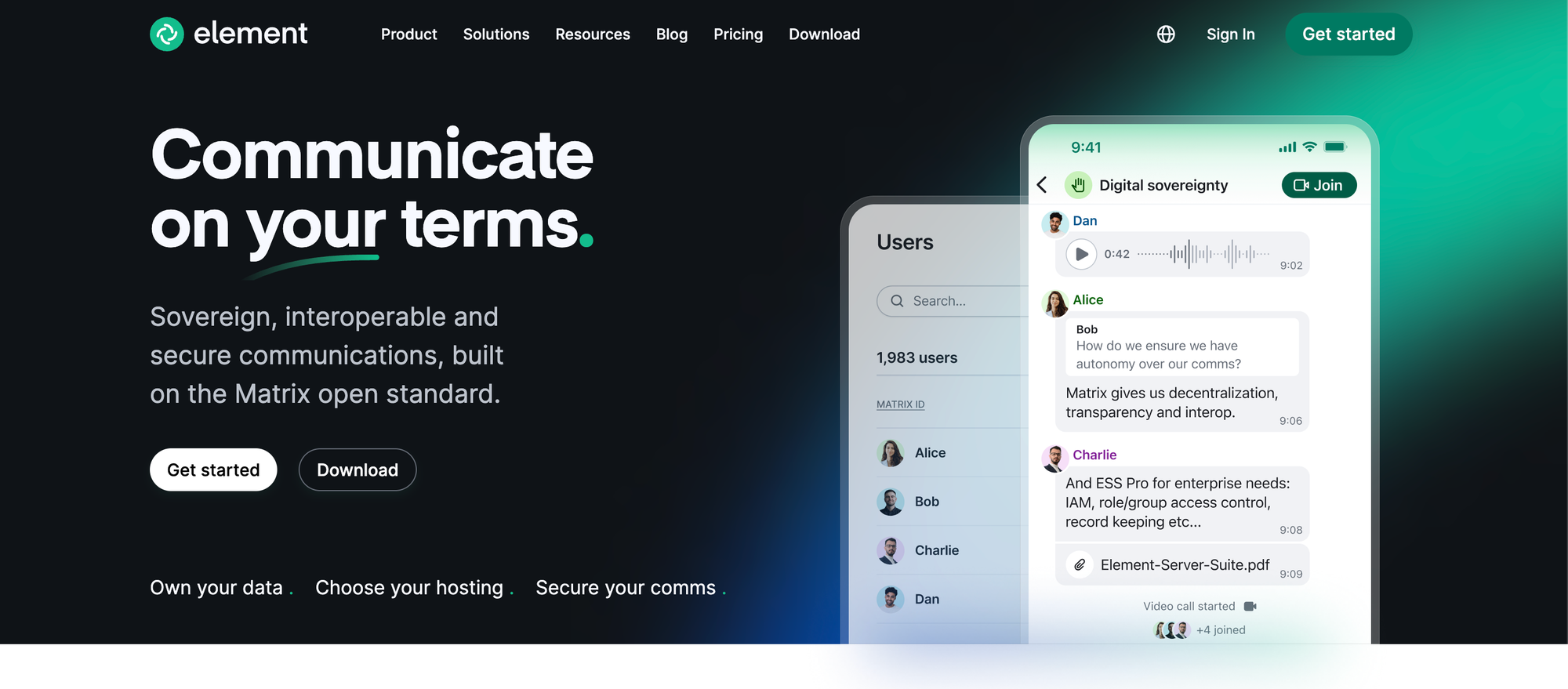
If you value privacy, data ownership, and interoperability, Element is the "final boss" of communication platforms. Here is why.
1. The Matrix Foundation: Chat Like Email
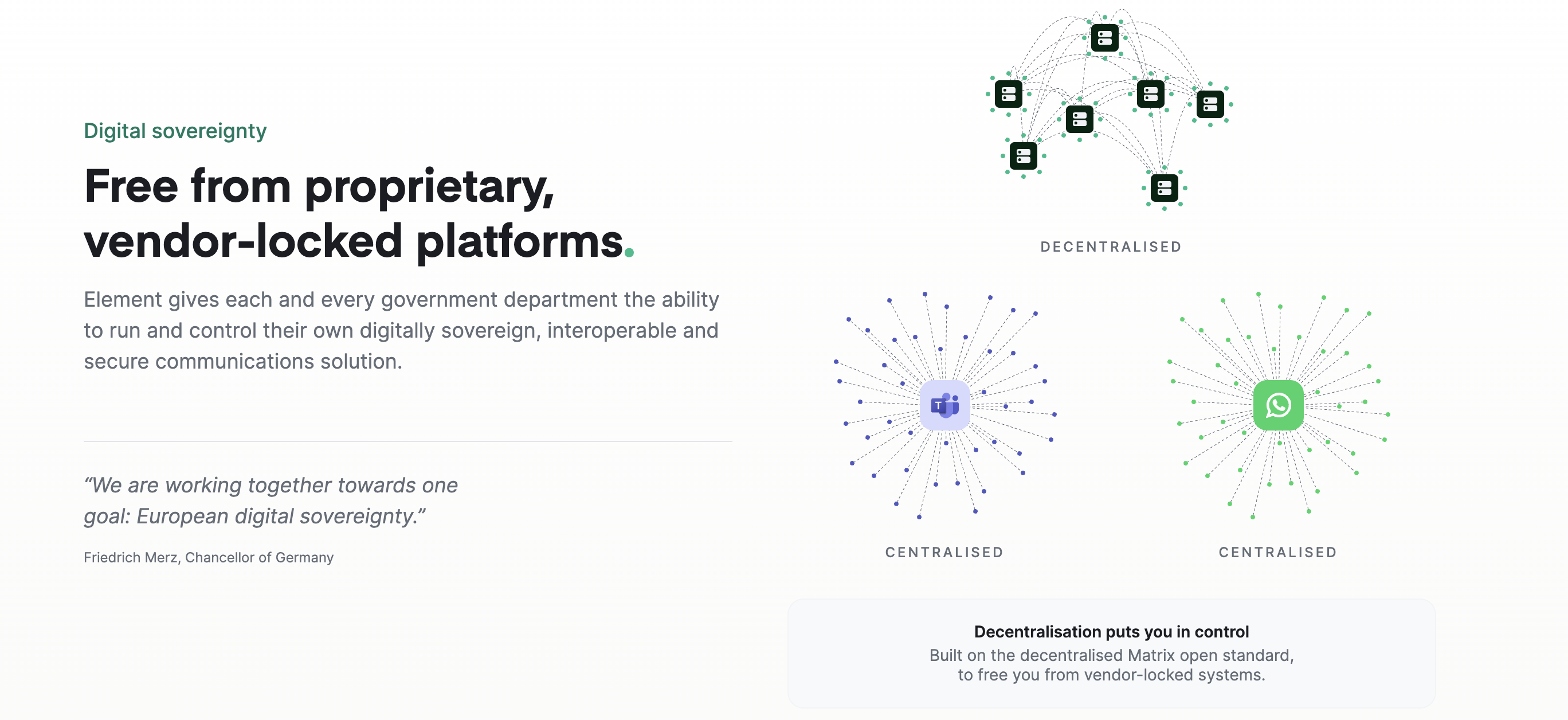
Most messaging apps are "walled gardens." If you use WhatsApp, you can only talk to people on WhatsApp. Element works differently because it is built on the Matrix protocol.
Think of it like email: it doesn’t matter if you use Gmail and your friend uses Outlook the underlying protocol (SMTP) allows you to communicate. Matrix does the same for instant messaging. By using Element, you can talk to anyone on any other Matrix-compatible client, regardless of which server they are using.
2. Total Data Sovereignty
The biggest problem with centralized platforms is that they own your data. If their server goes down, your business stops. If they change their terms of service, your privacy is compromised.
Element gives you three ways to live:
- Public Servers: Join millions of users on the
matrix.orghomeserver for free. - Element Cloud: A managed service for teams that want the benefits of Matrix without the server maintenance.
- Self-Hosted: Deploy your own homeserver (using Synapse or Dendrite) on your own hardware or VPC. This gives you 100% ownership of your message history, files, and user data.
3. Security Without Compromise
Security isn't an "extra" in Element; it’s the default.
- End-to-End Encryption (E2EE): Element uses the Olm and Megolm cryptographic ratchets (based on the Signal Protocol) to ensure that only the participants in a room can read the messages. Not even the server admin can peek into your chats.
- Cross-Signed Device Verification: You can verify your friends' devices via QR codes or emoji comparisons, making "Man-in-the-Middle" attacks virtually impossible.
- Decentralization: Because there is no single central point of failure or control, the network is resilient against censorship and large-scale outages.
4. The "Bridge" Advantage
One of Element’s most "magical" technical features is Bridging. Since Matrix is an open standard, you can run "bridges" that connect Element to other platforms.
Imagine using one app (Element) to chat with:
- Your colleagues on Slack.
- Your gaming friends on Discord.
- Your family on WhatsApp or Telegram.
- Legacy users on IRC.
This turns Element into a "Universal Chat Console," eliminating the need to have ten different tabs open just to keep up with your notifications.
5. Built for Enterprise & Government
Element isn't just for privacy enthusiasts; it is being adopted at a massive scale by organizations that cannot afford a data leak.
- The French Government: Replaced their internal tools with a customized version of Element called Tchap.
- The German Bundeswehr: Uses Matrix/Element for secure military communications.
- Large-Scale Communities: Used by organizations like Mozilla, KDE, and Matrix.org to host tens of thousands of users in a single, federated ecosystem.
Is it time to switch?
If you are tired of vendor lock-in and want a professional-grade tool that respects your digital rights, Element is the answer. It combines the usability of modern chat apps with the freedom of the open web.
Ready to get started?
- Try the Web App:app.element.io
- Self-Host: Check out theMatrix homeserver setup guides.