

The Ultimate AI Toolkit for 2025: Which Model Should You Actually Use?
Introduction
The "one-size-fits-all" era of AI is over. In 2024, we asked, "Which AI is the best?" In 2025, the right question is, "Which AI is best for this specific task?"
After a year of rigorous testing across coding, creative writing, visual design, and deep research, I’ve moved away from using a single generic chatbot. Instead, I’ve built a specialized toolkit where every model has a distinct job. If you want to optimize your workflow, here is the technical breakdown of which tool dominates which domain.
1. Perplexity AI
🏆 Best For: Deep Research, Real-Time Web Scraping, and Citations.
Perplexity isn't just a chatbot; it's an answer engine. While other models hallucinate when asked about current events, Perplexity excels at synthesis. It acts as a wrapper around multiple LLMs (giving you the option to switch between Claude and GPT-4o), but its real power lies in its Pro Search capability.
- Why it wins: It chains multiple search queries together to find obscure PDFs, academic papers, and forum discussions, presenting them with footnote citations.
- Use Case: When you need to write a factual article, research a competitor, or debug an error message with recent documentation that hasn't made it into standard training sets yet.
🔗 Official Site:perplexity.ai
2. Google Gemini (Advanced)
🏆 Best For: Content Rewriting, Native Workspace Integration, and Multimodal Editing.
Gemini (formerly Bard) has found its niche in the Google ecosystem. It shines when you need to restructure content without losing the original meaning, a task where other models often become too flowery or repetitive.
- Why it wins:
- The Rewriter: If you paste a rough draft, Gemini is exceptionally good at formatting it into tables, bullet points, or emails without "AI-ifying" the voice.
- Multimodal Editing: Gemini allows you to upload videos and images for analysis. While standard video editing is still maturing, its ability to "watch" a YouTube video and summarize specific timestamps or edit generated images (using the Imagen 3 model) is top-tier.
- Note: It integrates directly with Google Docs and Drive, making it the fastest localized tool for heavy Google Workspace users.
🔗 Official Site:gemini.google.com
3. ChatGPT (OpenAI)
🏆 Best For: Personalization, "Canvas" Writing, and Visual Design.
ChatGPT remains the jack-of-all-trades, but in 2025, it has pivoted hard toward personalization, coding, and design. With the introduction of "Canvas" (a dedicated workspace for writing and coding), it has become less of a chat window and more of a collaborative editor.
- Why it wins:
- Logo & Image Design: Powered by DALL-E 3, it is currently the most instruction-compliant image generator for non-artists. It can handle text-within-images better than Midjourney v6 in many simple logo use cases.
- Custom GPTs: The ability to upload your own "Knowledge" files allows you to create a personalized brand voice bot that writes exactly like you.
- Code mate: It provides the details of any code and a very simple approach for understanding any big topic very easily. And provides solutions to most of the issues you face in day to day.
🔗 Official Site:chat.openai.com
4. Microsoft Copilot
🏆 Best For: Enterprise Productivity and DALL-E 3 Access (Free).
Copilot (formerly Bing Chat) is your companion that provides more elaborate answers. It also supports Microsoft 365 (Word, Excel, PowerPoint), Copilot is the only choice that matters because of its data security perimeter.
- Why it wins:
- Image Generation: It provides free access to DALL-E 3 for logo and image generation, often with faster daily limits than the free tier of ChatGPT.
- Office Integration: It can turn a Word document into a PowerPoint presentation in seconds. It’s less "creative" but significantly more "productive" for office tasks.
🔗 Official Site:copilot.microsoft.com
5. Claude (Anthropic)
🏆 Best For: Coding, Complex Reasoning, and "Agentic" Workflows.
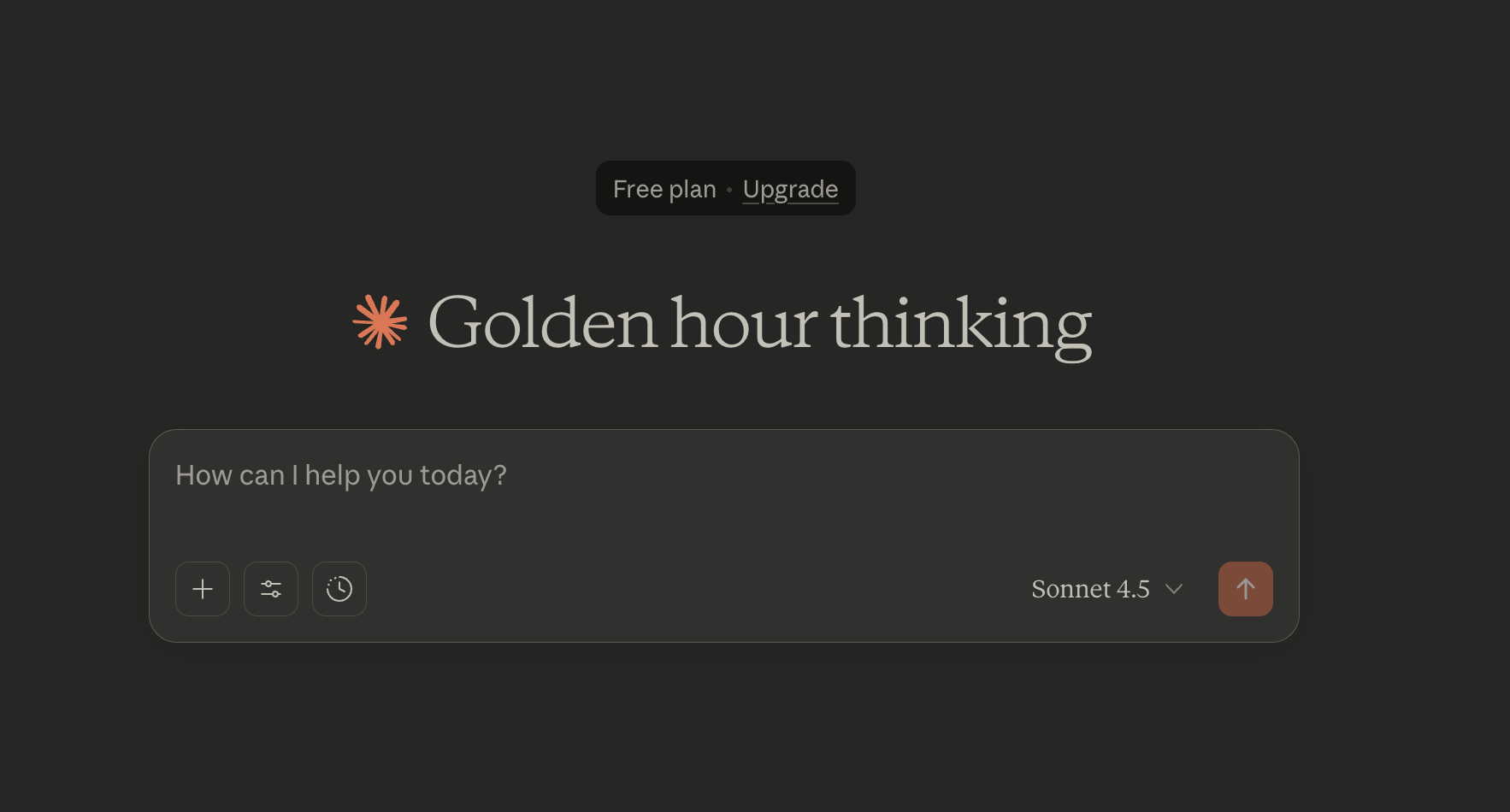
If you write code, Claude is currently the undisputed king. The Sonnet 3.5 and newer Sonnet 3.7/4.5 models have a "reasoning" capability that feels distinctively human. It doesn't just autocomplete code; it understands system architecture.
- Why it wins:
- Coding: It hallucinates less syntax errors than GPT-4o and can refactor entire files in one go thanks to its massive context window.
- Agentic Capabilities: This is the "Agentic Mode" you’ve heard about. Claude’s "Computer Use" feature allows it to navigate screens, click buttons, and execute complex multi-step workflows autonomously. While early versions can be prone to "looping" (getting stuck) or hallucinations, it surpasses all other models in attempting to act as an autonomous employee rather than just a text generator.
🔗 Official Site:claude.ai
The Verdict: My 2025 Stack
If you only have the budget (or mental bandwidth) for a few, here is the optimal stack:
- Claude for building (Coding & Logic).
- Perplexity for learning (Research & Facts).
- ChatGPT for creating (Images & Copy).
- Gemini for Image editing and content rewriting.


